Pages

Sunday, 18 September 2011

UBS raises rogue equity trade losses to $2.3 billion


Swiss bank UBS on Sunday increased the amount it said it had lost on rogue equity trades to $2.3 billion and alleged a trader concealed his risky deals by creating fictitious hedging positions in internal systems. UBS stunned markets on Thursday when it announced unauthorised trades had lost it some $2 billion. London trader Kweku Adoboli was charged on Friday with fraud and false accounting dating back to 2008. "The loss resulted from unauthorised speculative trading in various S&P 500, DAX, and EuroStoxx index futures over the last three months," UBS said in a brief statement. "The loss arising from this matter is $2.3 billion. As previously stated, no client positions were affected." Global stock markets have been extremely volatile in recent months, plunging on concerns over euro zone and U.S. debt crises and then rebounding on hopes for their resolution. The loss is a disaster for the reputation of Switzerland's biggest bank, which had just started to recover after it almost collapsed during the financial crisis and faced a damaging U.S. investigation into aiding wealthy Americans to dodge taxes. "Loss even more. Reads like they're making excuses," said Helvea analyst Peter Thorne of the UBS statement. The new scandal has prompted calls for its top managers to step down and for its investment bank to be split into a separate unit from its core wealth management business. Chief Executive Oswald Gruebel, who was brought out of retirement in 2009 to turn the bank around, was quoted in a newspaper on Sunday as saying he is not considering quitting over the crisis, but said it was up to the board to decide. In a memo to staff on Sunday, he said: "Ultimately, the buck stops with me. I and the rest of senior management are responsible for dealing with wrongdoing." Swiss newspapers quoted unnamed insiders as saying the UBS board and important shareholders such as the Singapore sovereign wealth fund were still backing Gruebel, with immediate changes at the top the last thing the bank needed. Gruebel is widely expected to present plans to drastically cut back the investment bank at an investor day in November. INDEPENDENT INVESTIGATION The bank, whose three keys logo symbolise "confidence, security, discretion," has pulled its "We will not rest" global advertising campaign for now, that was designed by advertising agency Publicis to try to rebuild its image. Meanwhile, UBS client advisers have been writing to customers to reassure them of the underlying financial strength of the bank despite the trading loss, a spokesman said. "That we now suffer this setback at this point in our efforts to improve our reputation is very disappointing. This incident also sets us back somewhat in our capital-building efforts," Gruebel said in his memo. "However, I wish to remind you that our fundamental strengths as a firm remain intact... we remain one of the best capitalized banks in the industry. UBS said its board of directors had set up a committee chaired by independent director David Sidwell, former chief financial officer at Morgan Stanley, to conduct an independent investigation into the trades and the bank's control systems. The bank said it had covered the risk resulting from the unauthorised trades, and its equities business was again operating normally within previously defined risk limits. It said the trader had allegedly concealed the fact his trades violated UBS risk limits by executing fake exchange-traded fund (ETFs) positions. "Following inquiries directed to him by UBS control functions that were reviewing his positions, the trader revealed his unauthorised activity," the bank said. "The positions taken were within the normal business flow of a large global equity trading house as part of a properly hedged portfolio," UBS said. "However, the true magnitude of the risk exposure was distorted because the positions had been offset in our systems with fictitious, forward-settling, cash ETF positions." The Sunday Times cited unnamed insiders saying the trader placed bets worth $10 billion before his losses were detected. ETFs are index funds listed on an exchange and can be traded just like regular stocks. They try to replicate index performances and offer lower costs than actively managed funds, but regulators have warned about risks from some complex ETFs. In the past three months, DAX futures have fallen 22 percent, Eurostoxx 50 futures have dropped 20 percent and S&P 500 futures have dipped 4 percent. The instruments involved in the UBS case are similar to those that Jerome Kerviel, the rogue trader at Societe Generale, traded when he racked up a $6.7 billion loss in unauthorised deals in 2008. Christoph Blocher, vice-president of the right-wing Swiss People's Party (SVP) -- the country's biggest -- renewed his calls for a splitting off of the investment bank. "One has to seriously examine a ban on investment banking for commercial banks," he told the SonntagsZeitung, adding his party might team up with the center-left Social Democrats to push for such a move.

Saturday, 17 September 2011

Another shipment of cocaine inside plastic bananas seized in Spain


National Police have seized almost half a ton of cocaine which had been smuggled into Spain hidden inside plastic bananas transported in a normal cargo of the fruit. It’s a method which has been used by drug smugglers before, leading to four arrests after 162 kilos of cocaine were seized at Algeciras Port this January. The Interior Ministry said in a press release on Thursday that the drugs were imported from Ecuador in containers of bananas by an import company which was set up for that purpose in San Roque, Cádiz province. The group is understood to have sent over a number of containers of real fruit from Ecuador before sending the cargo of cocaine. The gang’s rented warehouse in San Roque was kept under surveillance and raided after three containers were transported there at the end of June, where plastic bananas containing 448 kilos of cocaine were discovered amongst the fruit. Three people were later arrested in Roldán, Murcia, and in Pozuelo de Alarcón, Madrid, followed by a fourth suspect who was taken into custody in August in Alicante.

11 of the 54 prisoners in Menorca jail are British


11 of the 54 prisoners being held in prison on Menorca are British, according to the prison authorities, who says their presence on the island is dependent on the air connections to the UK, which allows family visits to the inmates. The same sources, quoted by Menorca.info, say that none of the Britons have a ‘conflictive’ profile. The jail on the Carretera de Sant Lluís also currently holds 23 prisoners who are of Menorcan origin or who have links to the island. Another 20 are being held ahead of their appearance in court.

Brazil judge's murder points to vigilante power


Judge Patricia Acioli was known for wielding a "heavy hammer," especially against rogue police who have formed illegal vigilante gangs. She had put more than 60 officers behind bars, most of them for murder. The Rio de Janeiro state judge paid for that fearlessness: Acioli was shot to death in front of her house last month. And all of the 21 bullets that hit her came from a lot issued to police, including some in Sao Goncalo, the city where she worked. While violence and impunity are common in Brazil, the brazen murder of Acioli was an especially heavy blow, a message of intimidation from the vigilante militias. The slaying was "a wound to the lawful state, to democracy; the figure of the judge is a symbol of justice," said Denise Frossard, a retired judge who presided over some of Rio's first cases against the militias in the 1990s. "If she is a judge and can be killed, how can a citizen feel secure enough to be a witness?" Acioli's death was the first murder of a judge in the state's history, though Frossard herself survived three assassination attempts and had eight security guards ensuring her safety while she was on the bench. Violent militias have grown in power and scope in recent years, taking over poor communities formerly controlled by drug dealers and coercing residents to pay for illegal utility hookups, transportation, and security. Their members include former and current police, firefighters and jail guards. Investigators say they have elected members as state and city legislators. They also have been praised by politicians, including Rio de Janeiro's mayor, for taking back swaths of territory from drug gangs. A probe by the state legislature in 2008 found militias were connected to execution-style killings, far-reaching extortion schemes, and the kidnapping and torture of a group of journalists investigating the gangs' activities. Acioli had been repeatedly threatened for taking on the police officers who were part of the gangs, and she had written letters to her superiors requesting protection. One week before her murder, she went to Rio police's internal affairs office and said she was being threatened by officers from Sao Goncalo, where she worked, and Niteroi, where she lived. The last case on her docket on Aug. 11, the day she died, involved policemen charged with executing an 18-year-old man in a slum. One of her last acts as a judge was to authorize their arrest. A month later, three of the same Sao Goncalo police officers were charged with her murder. The suspects knew the judge would ask for their arrest, and wanted to stop her, said Felipe Ettore, the head of Rio's homicide division, in a press conference this week. They didn't know she'd already issued the order. "Their way of stopping her was to kill her," Ettore said. "They went to court and followed Patricia to her front door." Nationwide, the lives of 134 judges are currently under threat, according to the National Council for Justice, which oversees the judiciary branch in Brazil. Requests for protection from magistrates jumped 400 percent in the month since Acioli's death, according to the Brazilian Association of Judges. The killing prompted the United Nations special rapporteur on the independence of judges and lawyers, Gabriela Knaul, to urge Brazilian authorities to protect those charged with enforcing the law. "The assassination of Judge Acioli is evidence of the existence of a pervasive and serious problem regarding the protection of judges in Brazil," said Knaul, a Brazilian judge herself. Acioli's caseload was taken on by three other judges. Seven prosecutors are now working with them. "Her death did bring on a fear among prosecutors and judges; they're human, and it's natural to think, 'That could be me tomorrow,'" said Claudio Lopes, Rio state's attorney general. "But if this was done to intimidate justice, it is backfiring. We will be more rigorous than ever." The work is not only dangerous, it's difficult. Militias infiltrate the state from local police departments to state legislatures. They have a particularly nefarious effect on the legal system because they blur the boundaries between legitimate agents of the law and criminals, Lopes said. "They're often composed of people credentialed by the state to promote public safety, and they turn against the state, against the public," he said. "They usurp the authority of the state. In this way, they are a danger that goes deeper than drug traffickers." Even a few years ago, some politicians still praised militias for doing what the state couldn't do: take on drug dealers entrenched in the city's shantytowns. Former Rio Mayor Cesar Maia welcomed them as a "lesser evil" and a form of "community self-defense" against drug gangs, according to the newspaper O Globo in 2006. Current Mayor Eduardo Paes praised militias in a July 2008 interview on Globo television, saying they "brought peace to the population" in areas where the state had lost sovereignty to drug lords. Such views are changing as the body count rises. The 2008 investigation led by Marcelo Freixo, head of the state legislature's human rights commission, led to the arrest of one state representative and six city council members for militia activity. Hundreds were arrested on other charges because of information detailed in the report. One of those arrested, Rio City Councilman Luiz Andre Ferreira da Silva, is accused of plotting to kill the city's police chief and Freixo. In Sao Goncalo, 34 officers were put on leave after Acioli's death because they face serious criminal charges such as murder, according to Rio state's Supreme Court. Arrest warrants have been issued for 28 of them. In spite of the threats to Acioli, court officials had cut her security detail from four to one in 2007, said Tecio Lins e Silva, an attorney representing her family. "This is a matter involving my life, and it is very important," Acioli wrote in a letter appealing the decision. "I don't understand the treatment being given to the case." But the security officers were not reinstated. At the moment she was shot, no one was there to protect her.

Brazil catches Irish man with gut full of cocaine


Irish man has been arrested in Brazil with almost a kilo of cocaine hidden in his gut, police there say. The 20-year-old suspect was detained as he tried to board a flight from Sao Paulo to Brussels. Officers said they became suspicious because he looked nervous. When questioned, he admitted having swallowed sealed capsules of cocaine. He was rushed to hospital, where he expelled 72 capsules containing 830g (1.8lb) of the drug. The hospital released a scan showing the man's gut filled with the oval-shaped capsules. The suspect is being held on suspicion of international drug smuggling. If found guilty, he could face five to 15 years in prison. Risk Brazil is a major transit point for smugglers moving South American drugs into Europe's lucrative drugs market. Neighbouring Bolivia, Colombia and Peru produce almost all the world's cocaine. Every year hundreds of people - known as mules - are arrested trying to smuggle the drug on international flights. As well as the danger of being caught, smugglers who hide drugs inside their bodies risk having the capsules burst, with possibly fatal consequences.

US vintage aircraft crash leaves three dead and 54 injured


The plane, a P-51 Mustang, dubbed the "Galloping Ghost" that was being flown by Jimmy Leeward, 74, crashed at 4.30pm local time (11.30pm GMT) into a box seat area in front of the main grandstand at the Reno Air Races,. "I heard his engine and looked up. He was within 100 feet. He was coming right down on top of us," witness Fred Scholz told CNN, adding that the plane had first flown closer to the stands than allowed. "It just happened very quick." The Federal Aviation Administration halted the air race after the crash, and was investigating the incident alongside the National Transportation Safety Board, an FAA official said. Video apparently taken from the stands and posted on YouTube showed a plane plunging nose-down into the tarmac as spectators were heard gasping: "Oh, my God." Debris billowed near the crash site, and officials then told spectators to remain where they were so emergency workers could get to the scene. The FAA official, spokesman Ian Gregor, said that multiple spectator fatalities and critical injuries were reported. FAA inspectors had been observing the race at the time of the crash, he said. The head of the Reno Air Racing Association, Michael Houghton, put the number of injured at 54 people and said the 74-year-old pilot was among those killed. He said that there appeared to be a "problem with the aircraft that caused it to go out of control". At least 15 people were in a critical condition after the crash, which a spokesman for the event called a "mass casualty situation" in a written statement. Mark Hasara of Cedar Rapids, Iowa, is a veteran of the Air Force who attended the race and witnessed the crash. "As soon as I saw his nose pointed at the ground, I knew he wasn't going to recover," Mr Hasara told Reuters. The Reno Air Races, which began in the mid-1960s and is an event that is held annually, feature planes facing off in multi-lap races at an airfield north of Reno. Renown Regional Medical Center spokesman Dan Davis said that at least two people were killed, a man and a woman, but they were not identified. Stephanie Kruse, a spokeswoman for the regional emergency medical service authority, said 15 of the injured were in a critical condition. "This is a very large incident, probably one of the largest this community has seen in decades," Ms Kruse told the Associated Press. "The community is pulling together to try to deal with the scope of it. The hospitals have certainly geared up and staffed up to deal with it." Mr Houghton said that Mr Leeward, from Ocala, Florida, was a real estate developer who had been racing planes since the mid-1970s. He added that most of Leeward's family had been at Friday's event. Ronald Sargis, a witness who was sitting in the box-seat area, said spectators could tell the plane was in trouble before it crashed. "About six or seven boxes down from us, it impacted into the front row," Mr Sargis told KCRA-TV in Sacramento. He added: "It appeared to be just pulverised." Another eyewitness, Maureen Higgins of Alabama, told the Associated Press that the pilot was on his third lap when he lost control. "I saw body parts and gore like you wouldn't believe it. I'm talking an arm, a leg," Ms Higgins said.

Thursday, 15 September 2011

Dale paid me to kill Hodson: Williams


Disgraced police officer Paul Dale paid underworld killer Carl Williams $150,000 to organise the murder of a man who was to testify against him, a court has heard. The trial into Williams' murder heard Dale also allegedly offered to kill Williams' gangland rival Jason Moran for $400,000 and regularly accepted cash in return for information on police operations. Despite admitting he had no argument with Dale's alleged victim, Terrence Hodson, Williams told police he organised an old mate to do the job. Advertisement: Story continues below "The Hodson job meant nothing to me personally, so I thought I'd ask if (name suppressed) was available," Williams told police. "It just really didn't matter to me whether it got done or not." The allegation is contained in a written statement Williams gave police two months before he was killed in Barwon Prison last year by the accused, Matthew Johnson. The statement was read to the Victorian Supreme Court on Wednesday and suppressed until Thursday. Dale and another former drug squad detective were facing court with Hodson over a bungled burglary. Hodson was killed before he was due to give evidence against the pair and Dale was not convicted. Evidence emerging from the murder trial of Matthew Charles Johnson, who is accused of killing Williams in Barwon Prison in April last year, has revealed the relationship between Dale, who was charged over the Hodson murder, Williams and other criminals. The evidence is contained in three statements Williams made to police as part of his deal to give evidence in the murder investigation into Dale and the hitman who killed Hodson and his wife Christine. It also reveals Ms Hodson was not part of the contract allegedly struck between Dale, Williams and the hitman. Williams said he asked the hitman "what about the sheila?" when he learned of Christine Hodson's death, only to be told he need not worry. Having organised the hit on Hodson, Williams said he arranged with Dale to have the $150,000 dropped into a wheelie bin at his mother's Essendon home. The court heard Dale told Williams he could give him information on police operations and other matters in return for money and the pair met regularly over the next couple of years. "On most occasions when I met with Dale I gave him an envelope with money in it," Williams said in a statement. Most of the payments were between $2000 and $5000, although Williams said he twice handed over $10,000. In one of his statements, Williams told police Dale had offered to kill gangland rival Jason Moran. "Dale said he could kill Jason for $400,000," he said. "I told them they were dreaming." Williams was convicted of Moran's murder, along with those of his father Lewis Moran and drug dealers Michael Marshall and Mark Mallia. Williams made the first of his three statements to police in connection with Dale and the Hodson murders in April 2007, when he was about to be sentenced for the three murders. In his initial statement he said Dale had told him he wanted Hodson killed and Williams offered help if it was needed. Williams said the negotiation went no further and that he didn't know who had killed the Hodsons. Almost three years later, while he was in jail, he made two further, and more frank, statements. "I didn't want to tell everything," he told police. "My attitude has changed." Dale questioned Williams' credibility and motivation for making his statements. "I'd like to ask people to probably look at the details of the person making the allegations firstly and then secondly look at the motivation behind what he's done," he told the Ten Network on Thursday. "Mind you, the things he said were said years later, after he's had plenty of time to think about ways of bettering his position. But look that's all going to be tested down the track." The murder case against Dale and the hitman fell apart when Williams was killed. Dale is now operating a service station in Wangaratta. Johnson's trial before Justice Lex Lasry is continuing.

Met chief to 'tag and test' drinkers in crime drive


Problem drinkers in London could be tagged and given twice-daily tests in a new "total war" on crime. Scotland Yard's new police chief today pledged to take on the capital's binge drinking as he unveiled tough crackdowns on anti-social behaviour, illegal drivers and gangs. Bernard Hogan-Howe, 53, the newly elected Metropolitan Police Commissioner, declared an "uncompromising" war on crime and criminals. His new measures include: Plans to flood the streets with thousands of officers on two days a month in single crime crackdowns. Seizing thousands of uninsured cars from motorists and criminals and putting them on public display. Boosting the Met's fight against gangs with reinforcements for a specialist gang-busting squad. Mr Hogan-Howe also said he backed a US-style crackdown on drink drivers and problem drinkers in which they faced twice-daily sobriety tests and the threat of jail if they continue drinking. Mr Hogan-Howe said the scheme, first introduced in Dakota, could involve people convicted of alcohol-related offences wearing tags or armbands which can detect if they had been drinking. He said : "There are two big aggravating features for any criminal activity, one is alcohol. About 80 per cent of the people in our cells overnight will have a drink issue. The other is drugs." In a frank interview, he also told how he had called in an outside force to carry out an independent review of the Met's investigation into phone-hacking. Mr Hogan-Howe was parachuted into the role of deputy commissioner in July after former chief Sir Paul Stephenson quit in the wake of the scandal. He said : "I have asked another force to have a look at the inquiry to reassure us we are going in the right direction and I think we are." He revealed he had also ordered a full review of the Met's response to the riots and declared he had not ruled out the possibility of using water cannon to "save lives" in possible future unrest. Mr Hogan-Howe won praise for slashing crime as chief constable of Merseyside with a zero tolerance crackdown on criminals dubbed "Total Policing". He said : "It is not just about being gung-ho, it is about helping victims, being professional and using technology." He also pledged to boost the Met's Operation Connect fight against gangs to cover a third of London within the next six months

UBS hit by $2bn rogue trade


Matthew Czepliewicz, an analyst at Collins Stewart, said the unauthorised loss cuts his 2011 earnings-per-share estimate for UBS by about 30pc - "a huge hit". He continued: "A loss of this magnitude will very likely have occurred in the FICC (Fixed Incomes, Currencies and Commodities) division, the very division UBS has been systematically rebuilding after shrinking it by 40pc during the credit crisis. That an unauthorised position of this size could have escaped oversight will renew pressure on management to radically scale back the FICC business, a volatile and capital-intensive business overall." He said that his upgrade of UBS to "buy" from "hold" on September 6 "now looks memorable, to say the least", but added: "As large and embarrassing as the loss is, it may in fact drive a positive strategic overhaul of the company. In the meantime, we await further detail on what went wrong and how management will respond." Andrew Lim, analyst at Espirito Santo, said the loss was manageable at group level at UBS. He added: "The $2 billion loss compares to our current estimate for the (third-quarter) group net earnings of 1.1 billion Swiss francs and (full-year estimated) net earnings of 5.1 billion Swiss francs. "The loss is therefore manageable at the group level, but is obviously not helpful for sentiment and confidence in the bank's risk management following the near-death experience of 2008/9." Fiona Swaffield, analyst at RBC, put the loss in context: "Assuming the loss is not revised at CHF1.7bn this is 3.4% of tangible book value end Q2 2011 and CHF0.35ps. Relative to target Basel III risk weighted assets of CHF300bn this is some 44bp. UBS on the most conservative measure has core T1 of 10% forecast end 2012 Basel III pre this and 13% with phased=in deductions. This would fall to 9.8% and 12.4%, respectively, so still respectable and above CS (8.8% on look through Basel III end 2012) but obviously hardly a positive as its strong capital base relative was an attraction." But she added the real issue over and above the financial impact is the reflection on risk management at UBS: "UBS was seen to have recovered significantly from the credit crisis and to have improved its risk management in the investment bank in spite of its struggle to improve returns. This obviously brings this very much into question." Goldman Sachs analysts Jernei Omahen and Peter Skoog wrote in a note: "This loss has the scope to have a material impact on the perception of UBS' private bank, impacting its future operating trends. "Today's announcement therefore adds to the long list of arguments (and pressure) for a substantially smaller investment bank." Louise Cooper, markets analyst at BGC Partners, said: "According to Bloomberg analysts were forecasting about a SFR 7bn or approx £5bn pre tax profit for UBS for the 2011, therefore a £1.3bn trading loss hits full year earnings by about a third." She added: "The jewel in the crown of UBS is its private banking business, producing consistent, quality earnings. An unexpected trading loss could do significant reputational damage to the bank especially given its track record during the crisis (massive recapitalisation and regulatory fines). Rich people tend not to want to do business with a bank where there are questions over risk control. UBS needs to do a good job in explaining what went wrong and assuring its clients that it will not affect them." Joshua Raymond, chief market strategist at City Index, commented: "Whilst the incredible volatility seen recently in the markets would have likely seen some traders lose and win big, the news that a rogue trader was allowed to stack up losses of $2bn will inevitably send nervous shockwaves through to those investors who have only just returned to the bank after a severe loss of confidence. "The Swiss firm has fought hard in the last few years to restore its credibility from having to be bailed out by the Swiss authorities, suffering a large fine for tax evasion and after it agreed to disclose the accounts of thousands of its clients to US tax authorities."

Fury over 'link' of drug arrests to Jodie's death


SPANISH police investigating the circumstances surrounding Jodie Nieman's death made nine arrests last week. Although police are certain the Kenley beautician died from a heart attack, it is not clear whether her death was drug-related. ​ MISSED: Jodie Nieman An investigation has been launched into drugs supply in Ibiza and police announced last Thursday that they had arrested nine men after seizing cocaine, thousands of ecstasy pills, steroids and laboratory equipment. One of the men is from Croydon but it is not suggested Ms Nieman, who died just days before her 20th birthday on July 15, knew him. The former nail technician's mother Debbie, of Waterbourne Way, Kenley, said she was "disappointed and angry" Spanish police had linked the arrests with her daughter. She said: "We still don't know if Jodie took any pills. The doctor in Ibiza said they weren't told she had taken any tablets. "Until we have results saying she took any drugs, we just don't know and it is upsetting because we are still waiting on tests." Spanish police said most of the pills found are known as Pink Rock Star, similar to those thought to have caused the death of Ms Nieman and the poisoning of others in July, officers added. The UK's Serious Organised Crime Agency took part in the operation against a mostly-British gang which travelled to Ibiza to feed the demand from the summer influx of clubbers. Detectives arrested five British men, including a 39-year-old from Croydon, three from Ireland and one from Poland. They were being questioned by officers from the Guardia Civil on suspicion of various drugs offences. The former Riddlesdown student was just three days into her holiday when she had a heart attack on a night out at the Space club in the Playa d'en Bossa resort. The teenager's funeral took place at Croydon Crematorium on August 16. Mum Debbie said her 19-year-old daughter was a "stylish princess" who would defend her friends to the end. Ms Nieman added: "She had champagne on the plane over and it came in a plastic glass – Jodie just said: 'Who has champagne in a plastic glass?' "That was just Jodie. Every day another person tells me they knew Jodie and they went to the funeral. I didn't know she was so loved."

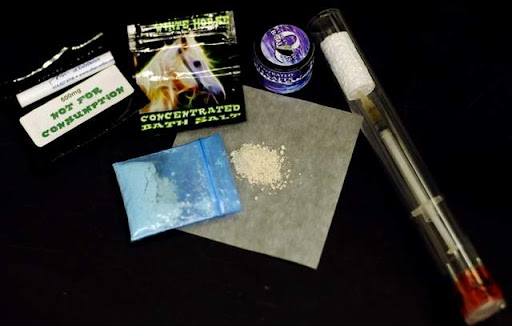
Three New Brunswick Smoke Shops Raided in "Bath Salts" Bust, Six People Arrested


Middlesex County Prosecutor's Office has announced that three smoke shops in New Brunswick and a gas station in East Brunswick were raided and charged in the sale of illegal drugs. According to the Prosecutor's Office, the raids began on Aug. 2 after four months of investigative work and netted the following arrests: Jarnail Sandhu, 25, of Sayreville, owner of the Shell gas station located at 1010 Route 18 in East Brunswick, was arrested and charged with distribution of bath salts and synthetic marijuana; possession of bath salts and synthetic marijuana and possession of drug paraphernalia. He was jailed with bail set at $100,000, with no 10 percent option. Sandhu's mother, Charanjit K. Sandhu, 56, of Nanuet, N.Y., was also arrested and released on her own recognizance. She faces the same charges as her son. Ayman S. Al-Nsairat, 40, of East Brunswick, owner of the Amsterdam Smoke Shop, 29 Easton Ave. in New Brunswick. He was charged with possession of toxic chemicals and possession of drug paraphernalia, and was released on his own recognizance. Maria M. Almanzar, 20, of Union City at the Amsterdam Smoke Shop. She was charged with possession of toxic chemicals and possession of drug paraphernalia, and distribution of toxic chemicals, and was released on her own recognizance. Lukasz M. Poplawski, 21, of Staten Island, N.Y. at the Amsterdam Smoke Shop. He was charged with possession of toxic chemicals and possession of drug paraphernalia, and distribution of toxic chemicals, and was released on his own recognizance. Ranmanjeet K. Dhillon, 24, of Woodbridge, at the Jamaican Discount Smoke Shop at 38-A Easton Ave. in New Brunswick. Dhillon was charged with possession and distribution of toxic chemicals and possession of drug paraphernalia, and was released on her own recognizance. Additionally, the Jamaican Smoke Shop at 40 Easton Ave. in New Brunswick was also raided, and "Some illegal substances and drug paraphernalia were seized," according to the Prosecutor's office. No arrests were made at that location. Bath Salts are mix of chemicals that mimic the effects of cocaine and methamphetamines and were banned earlier this year. 6,547 bags, jars and vials containing synthetic marijuana and bath salts were also seized by police during the investigation, marked for sale for between $20 to $30 each, according to the Prosecutor's Office. Police also seized 2,914 pipes, bongs and hookahs, 193 digital scales, 357 canisters containing nitrous oxide, 13 imitation handguns used to fire blanks, and 46 containers designed to conceal illicit drugs, according to the Prosecutor's Office. Packaging material, grinders, cigars and rolling papers, "All identified as products used to prepare and help sell the illicit drugs," according to the Prosecutor's Office. $25,145 in cash from the sales of the illegal drugs was also seized. More than $163,000 in synthetic Marijuana and bath salts were seized. Members of the Middlesex County Prosecutor’s Gangs, Guns and Drugs Task Force are handling the investigation, assisted by police in New Brunswick, East Brunswick and Sayreville, according to the Prosecutor's Office

Two Mexicans Killed for Reporting Criminals on Social Web Sites


Two young people were murdered and their bodies left hanging off a pedestrian bridge in Nuevo Laredo, a border city in the northeastern Mexican state of Tamaulipas, for presumably using social-networking Web sites to report criminals. The bodies of the young man and young woman showed signs of torture, and motorists were the ones who spotted the bodies and called police. Officials, however, have not issued a statement about the killings. The young man was dressed in a polo shirt and shorts, while the young woman wore only shorts. Messages warning others not to use social-networking Web sites to report drug traffickers were left on each of the bodies. One of the messages was signed “Z,” a reference to Los Zetas, which operates along the border with the United States and is considered Mexico’s most violent drug cartel. The grisly discovery prompted a large deployment of the security forces around the bridge. Los Zetas has been battling an alliance of the Gulf, Sinaloa and La Familia drug cartels, known as the Nueva Federacion, for control of smuggling routes into the United States. The cartel has also been blamed for several massacres in recent years. Los Zetas has been accused of being behind the Aug. 23, 2010, massacre of 72 migrants, the majority of them from Latin America, at a ranch outside San Fernando, a city in Tamaulipas. The cartel has also been blamed for the massacre of 27 peasants in May at a ranch in Guatemala’s Peten province, which borders Mexico and Belize. The latest brutal incident occurred on Aug. 25, when suspected Zetas gunmen set fire to Monterrey’s Casino Royale, killing at least 52 gamblers and employees trapped inside, most of whom died of smoke inhalation. Heriberto Lazcano Lazcano, known as “El Lazca,” deserted from the Mexican army in 1999 and formed Los Zetas with three other soldiers, all members of an elite special operations unit, becoming the armed wing of the Gulf drug cartel. After several years on the payroll of the Gulf cartel, Los Zetas, considered Mexico’s most violent criminal organization, went into the drug business on their own account and now control several lucrative territories.

Tuesday, 13 September 2011

Feds charge Colombian drug lord called ‘Loco Barrera’ and two partners


One of Colombia’s most-wanted drug traffickers with alleged ties to a narco-terrorist organization has been charged in Miami along with two other “high-level” partners, U.S. authorities said Monday. Daniel Barrera-Barrera, indicted in Miami on cocaine-smuggling conspiracy charges, operates mainly in the eastern part of Colombia between Bogota and the Venezuelan border. There, he maintains a partnership with the U.S.-designated terrorist group known as the FARC, composed of leftist guerrillas who allegedly play a major part in Colombia’s drug trade. The Colombian government has offered a $2.7 million reward for information leading to the capture of the defendant, aka “Loco Barrera,” who remains at large. In March, the Treasury Department designated Barrera-Barrera, 42, as a “specially designated narcotics trafficker,” because of his significant role in the international drug trade. In Miami, Barrera-Barrerra was charged with two brothers, Javier Fernandez-Barrero, 43, and Orlando Fernandez-Barrero, 45, who are known as “Los Gorditos.” They are in custody awaiting extradition to Miami. FBI Special Agent in Charge John Gillies said their “criminal enterprise is responsible for distributing tons of cocaine into the U.S and other countries.” Over the past year, U.S. and Colombian governments have opened up a new front in the war on drugs, zeroing in on emerging groups such as Barrera-Barrera’s that have competed to replace the once-powerful drug cartels in Medellín, Cali and the North Valley of Colombia, which authorities say have been largely dismantled. A new team of prosecutors has joined the FBI, Drug Enforcement Administration and Immigration and Customs Enforcement agents, in an alliance with Colombian investigators, to go after so-called bandas criminales, or criminal groups. So far, the U.S. has indicted more than 150 defendants in Miami as a result of that initiative, U.S. Attorney Wifredo Ferrer said. Earlier this month, Ferrer, his office’s chief of narcotics, George Karavetsos, and DEA Special Agent in Charge Mark Trouville flew to Colombia for an unprecedented meeting with that country’s president and attorney general to announce U.S. indictments filed against more than 50 leaders and associates of the bandas criminales.

Monday, 12 September 2011

A British couple who spent £9,000 on their dream wedding ceremony in Spain were jilted at the altar

British couple's dream wedding in Spain a write-off as priest fails to arriveSWNS


- by their priest.

Gary and Marie Mead had organised a ceremony with 74 of their friends after legally marrying in Las Vegas last August.

The pair had gone to great lengths to create their big day - from learning their vows inSpanish to exporting a cake from England - only to be left locked outside the pretty Las Alcazares church in Murcia, with no priest.

Gary, 51, who runs a scaffolding business, told the Daily Mail: 'The priest we had booked the whole thing with just never showed up.

'Our friends had a blessing by him in the same church just over a year ago and said how great it had been so we thought we'd do the same.

'When we got to the church and realised it was shut I grew more and more concerned but in the end we had to laugh.

'We knew the Spanish had a more laid-back attitude but didn't think it was this extreme.'

The couple had wanted a celebration near their villa in Mil Palmeras - but they didn't let a small thing like no priest put them off enjoying their reception.

After waiting 'for ages in a bar near the church', the couple realised he was coming, and along with their wedding party headed to the beach, before making their way to their reception at a nearby bar.

They have not contacted the priest for an explanation so far.

Marie said: 'All I'm really missing from the day are pictures inside the church.

'We have just chalked it up to experience - we would not go through it again, it is surprising how much work went into it.

'I'm happy though - we had a lovely celebration with families and friends and have some great pictures to remember the day, it was definitely memorable.'

Spanish-based Seven guilty of 'boiler-room' fraud


Seven men were convicted today of an £8 million boiler-room fraud, the Serious Fraud Office (SFO) said. The Spanish-based operation targeted thousands of investors in the UK applying high pressure telesales techniques to push shares in a bio-diesel company, Worldwide Bio Refineries (WBR). In fact, the company was practically worthless. One defendant, company director Redmond Johnson, 66, pleaded guilty to conspiring to defraud investors. Fellow director Dennis Potter, 72, who lived in Singapore, was convicted of the conspiracy along with John Murphy, 35, and Greg Pearson, 38, both of Marbella, Daniel Murphy, 37, and Lee Homan, 37, both of Hertfordshire, and Peter Bibby, 44, of south London, who all managed share sales. Bibby absconded before the Ipswich Crown Court trial and was convicted in his absence. There is a warrant for his arrest. Commenting on the convictions, SFO director Richard Alderman said: "This is an excellent result. Not only do boiler-room fraudsters prey on vulnerable people, they also deprive genuine businesses of the capital they need to grow. "Quite bluntly, they ruin lives. I am delighted that the SFO is playing its part in tracking down operations like these and bringing fraudsters to book." WBR was set up in 2003 and had a processing plant in County Durham that was purported to produce diesel fuel from vegetable matter. It also had a plant in Singapore producing diesel intended to be marketed in the UK. The share selling was undertaken by salesmen working from a number of boiler-rooms in Marbella and Barcelona although many of them used false names and claimed to be calling from offices Frankfurt, Stockholm or Amsterdam. The business prospects of the company and the bio-diesel market were inflated by WBR's directors and the salesmen, who claimed that substantial international business was being done and that the business's shares were valued at £110 million. Investors believed that their investment in a successful bio-diesel enterprise would net them significant short-term returns, bolstered by claims that WBR was to be floated on the stock market. These claims were bogus. The SFO found that the bio-diesel plant had no output and, with only limited imports coming from the Singapore plant, WBR was not being managed with any intention of it becoming a growing commercial success. Virtually all of WBR's revenue between 2005 and 2007 was generated by share sales. Of the £8.2 million attracted from investors, around £4 million was transferred to accounts in Cyprus, Jersey and Spain for the benefit of the boiler-room salesmen. The group will be sentenced at Ipswich Crown Court on September 23.

Spain killer bull named 'Mouse' wins fame, infamy


3,000 fans cheering, a hulking, black-and-white fighting bull named "Mouse" chased one daredevil runner after another, trying to flip them airborne and skewer them as he did a month ago in a fatal goring that enshrined his reputation as Spain's most feared and famous beast. Mouse was greeted in the southeastern farm town of Sueca like a rock star: Everyone stood up at 2 a.m. Sunday in the bull ring's grandstands as he charged across the sand after loudspeakers introduced him with the eerie strains of the soundtrack to "The Good, The Bad and The Ugly," the 1960s spaghetti western starring a young Clint Eastwood. The 550-kilogram (1,213-pound) bull didn't claim any more victims this time, but tried his hardest to gore runners. And he captured intense media coverage in what could be his last appearance before retirement amid the controversy he has generated about Spain's summertime tradition of bull versus human runs, a pastime that plays out in rings, narrow streets and plazas across the nation. After running with Mouse, a breathless Julian Herroja said the bull is so dangerous that "if you make a mistake, he won't. You'll be a victim for sure." More than 30 journalists were on hand to cover the event in Sueca, population 28,000, near the beach destination of Valencia. Though Mouse will make one more appearance before the end of his season this year, he will run around the ring without runners. Mouse's owner now fends off as many as 60 cell phone calls daily from reporters. Facebook pages dedicated to him include comments from some people praising him for taking revenge against humans in a country where slews of bulls are slain every year in bullfights by matadors. But Gregorio de Jesus is angry that Mouse has been nicknamed "Killer Bull," saying he gets blame for doing what comes naturally: Defending himself against perceived threats. "We go to entertain people so they'll have fun, but unfortunately they are fighting bulls, and there is always a percentage of risk," said de Jesus, 42, a former bull fighter who raises 70 specially bred bulls and 300 cows. The hype about Mouse has grown so much in Spain that de Jesus is forced to deny reports that the 11-year-old Mouse has killed as many as five runners during his career. But in addition to the 29-year-old victim Aug. 14 in the town of Xativa, he killed a 56-year-old man in 2006 and has seriously injured five more people over the years. Mouse got his name because no one ever expected him to turn into such a raging bull, de Jesus said. As a calf, he was tormented by several youths who broke into his pen and exhausted him almost to death. Then he was nearly fatally gored by another bull at de Jesus' ranch. Critics and bull run aficionados alike agree that security is lax at many small town bull runs, meaning almost anyone can participate — even if they're drunk, have taken drugs or aren't physically fit enough to sprint away from enraged bulls. Sueca's mayor beefed up security Sunday, and the extra contingent of police took away some suspected drunks during Mouse's run. After the bull's last deadly goring, Valencia's regional government announced plans to study how police can be given more authority to detain runners who shouldn't be in the ring, while stressing that the overall number of bull run injuries in the region where they run dropped to 486 in 2010 from 676 in 2008. Hector Benet, an insurance agent for the bull run industry, said the number of deaths each year in the region averages four, with dozens of serious injuries annually. While bulls in the runs aren't killed or bloodied like their counterparts in bullfights, animal rights groups say the events are a form of animal torture, with bulls terrified by the hundreds of people who taunt the animals by yelling at them, poking them with long sticks and tossing sand from the plaza at them.

Sunday, 11 September 2011

Microsoft online services hit by major failure


Millions of Microsoft users were left unable to access some online services overnight because of a major service failure. Hotmail, Office 365 and Skydrive were among the services affected. Microsoft was still analysing the cause of the problem on Friday morning, but said it appeared to be related to the internet's DNS address system. Such a major problem is likely to raise questions about the reliability of cloud computing versus local storage. Especially embarrassing is the temporary loss of Office 365, the company's alternative to Google's suite of online apps. Its service also went offline briefly in mid-August, less than two months after it launched. The latest disruption is believed to have lasted for around two-and-a-half hours, between 0300 GMT and 0530 GMT. In a blog, posted at 0649 GMT, Microsoft said: "We have completed propagating our DNS configuration changes around the world, and have restored service for most customers." The Domain Name System (DNS) is responsible for translating URL web addresses , such as bbc.co.uk into the internet's native system of IP addresses, e.g. 212.58.246.95.

Friday, 9 September 2011

Millions of Hotmail users cut off by Microsoft 'cloud' failure


As well as Hotmail, the outage affected Office 365 and the Skydrive online storage service. Microsoft said the cause appeared to be related to the Domain Name System, the computer network that ensures that web addresses are connected to websites. “Preliminary root cause suggests a DNS issue,” the firm said on its office 365 Twitter feed. The problems lasted for at least two-and-a-half hours, beginning at around 4AM British Summer Time. On a company blog, Microsoft said it had fixed the problem at 5.45AM, but the repairs took some time to “propagate” through the DNS network.  "We are working on propagating the DNS configuration changes and so it will take some time to restore service to everyone. Again we appreciate your patience," the firm said. For Office 365, Microsoft’s subscription-only competitor to Google Apps, which went live earlier this year, it was the second major technical failure in less than a month. Such incidents are likely to give pause to organisations considering migration to online “cloud” services, whereby software is delivered from vast data centres, over the internet.

Hague court jails ex-Yugoslav army general


highest-ranking officer of the former Yugoslav army has been jailed for 27 years by the UN tribunal at The Hague for war crimes. General Momcilo Perisic, who served as chief of staff of the Yugoslav army during the Balkans conflict, was found responsble for murder, persecution and attacks on civilians in Bosnia and Croatia in the 1990s. The tribunal found Perisic, 67, guilty of helping Serb troops plan and carry out war crimes, including the killing of 8,000 Muslim men and boys in Srebrenica and of the 42 month-long siege of Sarajevo. Perisic was also convicted of failing to punish his subordinates for their crimes of murder, attacks on civilians, and injuring and wounding civilians during rocket attacks on Zagreb in Croatia. He was also found guilty of securing financial and logistical support for Serbs in Bosnia and Croatia. Criminally responsible "Momcilo Perisic was found criminally responsible for aiding and abetting murder, inhumane acts, attacks on civilians and persecution on political, racial or religious grounds in Sarajevo and Srebrenica," Justice Bakone Moloto said. Perisic becomes the first Belgrade official to be convicted for Serbia's role in the wars in Bosnia and Croatia, a role the regime in Serbia has always staunchly denied. The court also found Perisic bore command responsibility for the shelling of Zagreb in 1995. The tribunal found evidence that Perisic had had a "collaborative relationship" with Bosnian Serb military commander General Ratko Mladic, and "substantially aided his operations". Perisic had kept General Mladic on the Yugoslav Army payroll list, and personally signed Mladic's promotion to the rank of colonel general in 1994. Mladic is currently on trial at The Hague on charges of crimes including genocide. But the tribunal did not find evidence that Perisic had "exercised effective control" over Mladic or any other Yugoslav Army officer serving in the Bosnian Serb army. Mladic has been indicted for genocide by the Yugoslavia tribunal and was arrested in May this year.

Freed Egyptians tell of torture in Libyan jails


With drawn and gaunt faces, some 30 Egyptians holed up in a modest Libyan hotel speak of the incarceration and torture they suffered at the hands of Muammar Gaddafi’s loyalists. “They told me, ‘You Egyptians, you caused problems in your country, and now you have come to destroy ours’,” said Mahmud Abu Zeid, referring to the popular uprising that ousted neighbouring Egypt’s president Hosni Mubarak in February. “They wanted me to say that I was armed and had encouraged Libyans to rise up against Gaddafi,” he said. The 31-year-old said he was the first Egyptian to have been jailed in Abu Slim, a district of Tripoli that saw some of the fiercest fighting and worst atrocities before Gaddafi lost his grip on the capital late last month. Abu Zeid said the Gaddafi loyalists forced the Egyptians to record confessions that they had triggered the revolt against his regime, before they were eventually freed by revolutionary fighters. “For five months, they gave electric shocks to my son. I was so weak that I was unable to walk, so they dragged me like a sack,” he said, adding, “I ended up recording their message.” Under pressure he “confessed” to having used guns to encourage Libyans to call for the ouster of Gaddafi, he said, adding however that the Libyans who heard the recordings were not fooled. Abu Zeid’s account tallied with that of other refugees at the hotel in Benghazi, the rebellion’s stronghold in eastern Libya, some 600 kilometres (370 miles) from their homeland. “They gave out bread by kicking it at us, and we had a litre (two pints) of water to be shared among a dozen prisoners,” said another Egyptian man who added that he had been shot twice in the leg. It was still difficult for him to walk. Like him, other men in the hotel showed scars and burn marks on their backs they said were the result of torture. Tamer Rad, an Egyptian labourer who worked in Libya for two years, said he had been forced to to drink urine when he asked for water. “I was really thirsty. I asked for water, crying. They told me ‘You want to drink? Here!’ And they poured urine into my mouth. I was handcuffed, I could not resist so I had to drink it,” he said. The 26-year-old said the Egyptians had been stuck in Benghazi for several days and that he now had only one thought — of leaving Libya and returning to Egypt. The group said they fled to Benghazi after being freed on August 21 when anti-Gaddafi fighters broke open several jails as they overran Tripoli. And they had been unable to move on because, they said, the Gaddafi loyalists burned their travel documents and they are unable to contact the Egyptian embassy in Libya. On Monday, the Egyptian foreign ministry said the men would be repatriated on the same day, explaining that they had been forced to stay in Libya after the fall of the regime due to “insecurity on the roads” and the closure of airports.

Thursday, 8 September 2011

Citigroup banker faces 30 years in jail after admitting $22m fraud


Former Citigroup banker Gary Foster has pleaded guilty to embezzling $22m (£14m) from the bank, money he spent on a lavish lifestyle of fast cars and fancy apartments. He faces up to 30 years in jail. The 12-year Citigroup veteran spent hundreds of thousands on cars including a Ferrari and a Maserati Gran Turismo, even though he is legally blind and was unable to drive them. He hired a chauffeur. Foster, 35, was arrested in June at John F Kennedy Airport as he was getting off a flight from Bangkok. He had quit the bank in January before Citi had uncovered his scheme. A former treasury finance department executive, Foster earned $100,000 a year managing internal investments at the bank. Prosecutors said his scheme began in September 2003 and continued into 2011. He wired the money from internal Citi accounts into his personal bank account and covered up his tracks by assigning phony contract or deal numbers to the transfers to make them appear bona fide. According to prosecutors, between July and December 2010, he moved around $14.4m from Citigroup's debt adjustment account and $900,000 from the bank's interest expense account to his personal account in eight separate wire transfers. In a single transfer, on 8 November, he is alleged to have wired himself $3.9m. The US Attorney's Office in Brooklyn has already seized $16m in assets including his cars, an exclusive apartment in Manhattan's Rockefeller Centre, an apartment in Brooklyn and mansion in Englewood Cliffs, New Jersey. "The defendant violated his employer's trust and stole a stunning amount of money over an extended period of time to finance his personal lifestyle," said US attorney Loretta Lynch. "We will vigorously investigate and prosecute such conduct and seek to recover as much of the proceeds as possible."

American Banker Shows DOJ Sat On a Bank-Kickback Scandal


Jeff Horwitz has a big scoop in today’s paper, reporting on a HUD investigation that says banks forced mortgage insurers to pay them $6 billion in kickbacks over ten years. HUD’s inspector general tied a bow on the case and presented it to Obama’s Department of Justice, which has sat on it for two years now. It’s just the latest example of the Obama administration not going after the banks. Here’s the gist: Most homebuyers don’t put 20 percent down and banks require them to buy mortgage insurance from third parties to cover their risk. In the 1990s, banks started requiring insurers to pay them to reinsure the loans. Reinsurance is basically insurance for insurance companies, and if a deal isn’t crooked, the reinsurer will be compensated based on the risk it takes. But there was a major market flaw here (and an antitrust issue, if you think about it)—Banks control who gets to insure mortgages—and they took full advantage of it, naturally. If a PMI company resisted paying kickbacks—or didn’t want to pay a higher level of bribe—the bank would take its mortgages to someone who would. HUD’s IG says they gouged the PMI companies and consumers: Documents from the investigation show that the inspector general’s staff concluded that banks and insurance companies had created elaborate financial structures that had the appearance of reinsurance but failed to transfer significant amounts of risk to their bank underwriters. Some of the deals were designed to return a 400% profit on a bank’s investment during good years and remain profitable even in the event of a real estate collapse. Making matters worse, banks allegedly forced unknowing consumers to buy more insurance than they needed and failed to properly disclose the reinsurance agreements, another RESPA violation. But AB’s excellence here isn’t just the scoop, nice as that is. Horwitz and the Banker do a very good job explaining a somewhat complicated topic. This piece could have got bogged down in the details of the arcane world of captive mortgage reinsurance, but it doesn’t. That’s no small thing. There are a couple of other interesting points here, including this statement from Wells Fargo: Wells Fargo said in a written statement to American Banker that risk was split equitably under its contracts with mortgage insurers. It further denied that its captive mortgage reinsurance arrangements had ever been under HUD investigation. “It is simply not true that Wells Fargo has ever been the subject of a HUD investigation involving either our captive reinsurance programs or our relationships with any private mortgage insurance company,” the statement says. The Banker nicely places these graphs directly after a quote from the HUD investigation of Wells. It also reports that HUD found that “Nearly all loan files reviewed show borrowers with excessive coverage placed on their loan.” Banks gouged consumers on mortgage insurance because they were getting a taste. Actually, a 40 percent cut with 10 percent of the risk is more than a “taste.” “Half” would be more like it. At some point when you sit on a slam-dunk case like this long enough, it starts smelling pretty bad, particularly when your administration has bailed out and protected them at almost every turn, and you’ve recently been exposed pressuring other law-enforcement agencies to ease up on the banks.

Corruption scandal plunges Kuwait into deep crisis


The wealthy Gulf state of Kuwait appeared headed Thursday for a major political crisis over allegations of corruption involving several members of Parliament and former ministers. Media reported that a number of banks planned to refer as many as 15 MPs and possibly former ministers to the public prosecution to investigate "suspicious" huge cash deposits into their accounts. Citing informed sources, Al-Rai daily said local banks are likely to refer between 15-20 MPs in the 50-member parliament to public prosecution to probe money-laundering suspicions. It said a number of former ministers could be involved in the scam. State Minister for Cabinet Affairs Ali al-Rashed denied late Wednesday reports that incumbent ministers were involved in the alleged scandal. The government has instructed the central bank and the finance ministry to "take all necessary legal measures" to deal with the allegations. The scandal, as opposition MPs describe it, was exposed by Al-Qabas newspaper in an unsourced report two weeks ago that cash funds totaling 25 million dinars ($92 million/65.4 million euros) had been deposited into the accounts of two MPs. The report claimed the deposits were linked to domestic political events including grillings, indicating that the deposits were used to buy the support of the lawmakers in crucial voting in parliament. Independent Shiite MP Hassan Jowhar expected the issue to develop into a major political crisis that will lead to dissolving parliament and calling for snap polls, the fourth since May 2006. Youth activists campaigning to oust Prime Minister Sheikh Nasser Mohammad al-Ahmad Al-Sabah, a senior member of the ruling family, plan to stage a new rally on September 16 and the corruption charges could energize them. Kuwaiti opposition MPs demanded recalling parliament from summer recess for an emergency session on September 22 to review government measures on the allegations and debate and pass a number of anti-corruption laws.

Shameful phone hacking scandal forces change inside the Murdoch bunker


A community with a voracious appetite for scandal, it does appear we are experiencing Murdoch news fatigue. Like frogs in boiling water, we are losing sensitivity to the barrage of sensational News Corp instalments flowing from the phone hacking affair. On Tuesday, two former News International managers - head of legal affairs Tom Crone and News of the World editor Colin Myler - told a British parliamentary committee that James Murdoch had been made aware of widespread phone hacking despite his written statement to the contrary. The testimony was another milestone in the series of explosive revelations of systemic criminal phone hacking which had been going on for years but allegedly covered up by a corporate and police conspiracy. Advertisement: Story continues below Since the hacking affair was blown open, there has been a myriad of developments from the company, government and police - many of them astonishing. Much of this is highly significant to the Murdoch empire, and the ramifications have been difficult to digest. This shameful episode has changed the News Corp organisation and Rupert Murdoch's management style. In a corporate sense, the decision by Murdoch to undertake a $US5 billion ($4.7 billion) share buyback is, on its own, momentous. Aggressive expansion of the News Corp empire has been a hallmark of Murdoch's modus operandi. The decision to undertake a capital management program that allocated cash to shareholders rather than to acquisitions marks a major departure. The focus of News Corp's strategy in the past has been on raising funds and using available cash to expand, and avoiding the dilution of Murdoch family control. This was never more evident than in the creation of News Corp non-voting stock and the move to domicile the company in the lax regulatory jurisdiction of Delaware. The only other incidence of Rupert Murdoch bowing to outside pressure was in the early 1990s, when the Pittsburgh Bank famously forced News Corp to the brink of bankruptcy by threatening to block the rollover to a new debt package. News Corp has otherwise been run by Rupert Murdoch and in his way. The notion of appeasing minority shareholders is new to Murdoch, as is divorcing the hard-wired nepotism.

Amelia Hill was questioned under caution by police in an inquiry into alleged leaks of information from Operation Weeting

amelia-hill-guardian-police
. Photograph: Katherine Rose

The National Union of Journalists and a respected media watchdog have criticised the questioning of a Guardian journalist in an inquiry into alleged leaks of information from Operation Weeting, the investigation into phone hacking at the News of the World.

It emerged on Wednesday that Amelia Hill, a reporter involved in a number of the Guardian's key phone-hacking revelations over recent weeks, was questioned under caution several days ago in a case that raises concerns about attempts to criminalise contact between journalists and off-the-record sources.

Last month a 51-year-old detective constable was arrested in connection with alleged leaks from the Scotland Yard phone-hacking investigation. At the time there were reports that the officer had passed information to the Guardian, but the newspaper said it had "no comment to make on the sources of our journalism".

Michelle Stanistreet, the general secretary of the National Union of Journalists, said that there was "a vital journalistic principle at stake here" and that "it is outrageous that an allegation of off-the-record briefings is being treated as a criminal matter".

She added: "There is a clear distinction between legitimate off-the-record interviews and the illegitimate payment of bribes."

Martin Moore, the director of the media watchdog the Media Standards Trust, said that in the light of the phone-hacking scandal it was becoming "increasingly important to sustain and defend journalism in the public interest". He said that it was "not the time to be threatening public interest journalism" by the police moving to question reporters such as Hill.

The Guardian said in a statement: "We can confirm Amelia Hill has been questioned in connection with an investigation into alleged leaks." The newspaper argued that the case could have lasting repercussions for the way journalists deal with police officers. The statement added: "On a broader point, journalists would no doubt be concerned if the police sought to criminalise conversations between off-record sources and reporters."

Although the paper said it would not comment on any specific confidential source, a spokesman said Hill had never paid a police officer for information.

The police investigation into leaks from Operation Weeting has been going on for several weeks.

Meanwhile, Raoul Simons, 35, the deputy football editor of the Times, became the 16th person to be arrested as part of the phone hacking enquiry.

Simons, who had joined the Times from the Evening Standard in August 2009, is understood to have been arrested at 5.55am on suspicion of conspiring to intercept communications. He was released on police bail until a date in October.

He was not arrested by prior appointment. He was taken to a north London police station and questioned on suspicion of conspiracy to intercept voicemail messages, contrary to Section 1 (1) of the Criminal Law Act 1977.

Hill's police interview comes amid growing pressure to clamp down on contacts between officers and journalists following the News of the World phone hacking scandal, which has spread out into wider allegations of police corruption.

Emails from News International allegedly imply that journalists on the now closed Sunday tabloid bought copies of Buckingham Palace's private phone directory from a royal protection officer.

Following those revelations, an inquiry by Her Majesty's Inspectorate of Constabulary is examining "alleged corruption and abuse of power" in police relationships with the media, and Elizabeth Filkin, the former parliamentary commissioner for standards, heads a group drawing up a framework for how police officers handle their relationships with reporters. Both inquiries are considering whether communication between police officers should be officially monitored and recorded by a press officer.

The questioning of Hill has similarities to a case police mounted against Sally Murrer, a reporter on the Milton Keynes Citizen, and a former Thames Valley police detective, Mark Kearney, which was thrown out. Kearney had been accused of leaking information to Murrer. The collapse of the case was widely seen as a victory for journalistic freedom.

It was reported meanwhile that Andy Coulson, the former editor of the News of the World and the prime minister's former personal communications director, is refusing to appear before a Commons select committee that is investigating phone-hacking.

His solicitors have written to the culture, media and sport committee declining an invitation to appear, citing "concerns" about "parallel inquiries and investigations and the publicity generated by them".

He has consistently denied knowing that phone hacking took place but last month a previously unseen letter from Goodman emerged that claimed phone hacking was "widely discussed" at editorial conferences until Coulson banned mentions of it. Goodman's letter also claimed that Coulson had offered to let him keep his job if he agreed not to implicate the paper in hacking when it came to court.

Coulson resigned from the News International paper in 2007 after its former royal editor Clive Goodman was jailed on phone-hacking offences.

It also emerged yesterday that MPs on another committee have been told that News International asked a technology firm, HCL, to delete emails and other documents 13 times since 2009.

Technology company HCL, which provides services under contract to News International, informed the Commons home affairs committee in August that it was aware of the deletion of hundreds of thousands of emails on nine occasions between April 2010 and July 2011, but said it did not know of anything "untoward" behind the requests. Yesterday, HCL's solicitor, Stuart Benson, contacted the committee again to say that a further four requests had come to light - one of which related to the deletion of emails from an inbox of a user who had not accessed his account for eight years.

Wednesday, 7 September 2011

Parents appear in court on murder charge


The parents of Bradford-born suspected honour killing victim Shafilea Ahmed appeared in Court today, accused of her murder – eight years after she disappeared from her home. Iftikhar Ahmed, 51, and Farzana Ahmed, 48, appeared before magistrates to face the charge of killing their teenage daughter. Shafilea, 17, vanished from her home in Warrington, Cheshire, in September 2003 amid fears she was being forced into marriage. Her decomposed remains were discovered on the banks of the River Kent, near Kendal in Cumbria, in February 2004. Her parents were today remanded in custody when they appeared before Halton Magistrates' Court in Runcorn, Cheshire.

'Terrorist' Attack Hits New Delhi


Indian authorities say a terrorist attack outside the Indian high court in New Delhi killed at least 11 people and injured 66 others. Police believe the explosive was placed inside a briefcase near a main gate to the high court in New Delhi.  The blast is being described as a "medium-intensity bomb." Injured were rapidly transported to area hospitals and police cordoned off the area to begin an investigation. Speaking from Bangladesh, Indian Prime Minister Manmohan Singh was quick to label the explosion an act of terror. "This is a cowardly act of a terrorist nature... All the people of India have to stand united so that the scourge of terrorism is crushed," he said. Indian Home Minister P. Chidambaram visited the bomb site and says top national investigation teams are examining evidence. "At this stage, it is not possible to identify the group that caused the bomb blast," he said. There have been no claims of responsibility. Chidambaram reminded lawmakers that New Delhi is a target of terrorist groups, especially when parliament is in session. "We shall never be intimidated by terrorist groups," he said. "We are determined to track down the perpetrators of this horrific crime and bring them to justice." In New Delhi, there have been 15 bombings since 1997. For many, Wednesday's explosion also called up fresh memories of July's serial bombing in the southern Indian commerce capital, Mumbai, which killed 20 people.

Tuesday, 6 September 2011

Former executives challenge Murdochs' testimony


Jonathan Chapman, the former director of legal affairs with News International, said Rupert Murdoch wasn't being accurate when he told Parliament that he blamed the London law firm Harbottle & Lewis for failing to uncover the scope of the hacking scandal back in 2007. News International is the British arm of Murdoch's global News Corp. media empire. "I don't think Mr. Murdoch had his facts right," Chapman told lawmakers. "He was wrong." Chapman was one of four executives fielding questions from Parliament's media committee about what they knew and when — and all have already cast doubt on key aspects of the testimony given by the Murdoch family earlier this summer. The hacking scandal has decimated Murdoch's British newspaper arm, leading to the closure of its top-selling Sunday tabloid, News of the World, and the arrests of more than a dozen journalists. It's also rocked the top levels of Britain's political and police elite. Andy Coulson, a former News of the World editor and until recently one of Prime Minister David Cameron's top aides, has resigned — as have the two top officers with Scotland Yard. Coulson was one of 15 people arrested. Media committee chairman John Whittingdale says the latest hearing aims to uncover the truth about a critical piece of evidence, unearthed in 2008, suggesting that voicemail interception at the News of the World was far more widespread than the tabloid claimed at the time. Questions about who saw the evidence are critical to establishing whether there was an attempt to cover up the scale of illegal behavior at the now-defunct tabloid. The News of the World stands accused of spying on a host of politicians, celebrities, top athletes, crime victims and even terrorism survivors by systematically intercepting voicemail messages in an effort to get scoops. Allegations of computer hacking and police bribery are also being investigated by Scotland Yard. The evidence in question was an email carrying the transcript of an illegally intercepted conversation and marked "for Neville" — an apparent reference to the News of the World's chief reporter, Neville Thurlbeck. Because it apparently implicates others in the hacking, the email has the potential to undermine News International's fiercely held contention that one reporter alone, Clive Goodman, had engaged in phone hacking. If Rupert Murdoch's son James knew about the email — and was aware of its implication — it would lend weight to the suggestion that he had approved a massive payoff to one employee in an effort to bury the scandal. James Murdoch has said earlier that he was not aware of the email at the time, but former News International legal adviser Tom Crone and Colin Myler, a former editor at News of the World, contradicted him in Tuesday's testimony. "I told him about the document," Crone insisted, adding there could be no doubt that "this document meant that News of the World had a wider problem and that we had to get out of it." Daniel Cloke, News International's former personnel director, also contradicted James Murdoch's contention that he and Chapman had approved the massive compensation awarded to Goodman, the disgraced reporter. One lawmaker has alleged that payment was made to buy Goodman's silence about the scale of phone hacking at the paper. Cloke and Chapman said it was Murdoch's right-hand man, Les Hinton, who signed off on the quarter million pound payout. Hinton, the publisher of The Wall Street Journal, was the most senior Murdoch executive to resign in the hacking scandal.

Domestic helps’ accomplices prime suspects:


The two accomplices of the two domestic helps arrested for the murders of Juhu resident Kavita Suchak and her manager Prakash Bagwe on August 30 were the masterminds behind the murders said investigators, a day after arresting all four, two from Navi Mumbai and two from Nanded. Based on the investigations, police said the two domestic helps identified as Ram Singh Badaila and Tek Singh Badaila, also have a past crime record. According to Vishwas Nangre-Patil, Additional Commissioner (West region), the police are now compiling a database of domestic helps working in each society in the western region and their backgrounds would be checked. However, the victim had not verified the backgrounds of the two before hiring them, which made it difficult to trace them, said Nangre- Patil. The police arrested the Badailas and their accomplices from Navi Mumbai on Saturday. Nangre- Patil further said that the two Nepali nationals had been working for the Suchaks for the past five years. They had come in contact with two of their friends, Prem Bahadur Badaila and Bhim Bahadur Beek over the years. “The Suchaks owned a traditional safe in the house, apart from an electronic vault. The domestic helps hoped to find a large sum of money in the traditional safe. But the safe was empty as it was only maintained as a showpiece and as a object of faith. The gang bludgeoned Kavita with a crowbar when she returned home after dropping her kids to school a few minutes earlier than her usual schedule on August 30. Bagwe was strangled and gagged by the accused, as he had witnessed Kavita's murder and raised an alarm," Nangre-Patil added. The gang stole a laptop, three cellphones, jewellery and cash, collectively worth Rs 1.24 lakh. After leaving Kavita's house, the gang split up. Prem headed to Nerul in Navi Mumbai while the other three went to Pune. From Pune, they went to the house of a relative, Dev Bahadur, in Nanded. The police tracked down Prem first, by tracing the location of the stolen cellphones. “One of our teams went to Nepal and with the help of BSF kept a watch on the border to stop the accused from leaving the country. Another team went to Nanded with Prem,” said Pratap Dighavkar, Deputy Commissioner of Police (zone IX). Dressed in plainclothes, the policemen accompanied Prem to Dev Bahadur's house. “We did not want to reveal that Prem had been arrested, so we let him walk alone towards the house. Dev Bahadur came out of the house and Prem signaled to us that he was not a part of the gang. Prem then led us to Bhim who had sat in an autorickshaw and to Ram and Tek who were hiding in a water pipeline,” an official said. Bhim was arrested in the past for two cases of theft while Prem was booked for assaulting a government servant at MIDC. “The robbery at Suchak's residence was planned in detail. Bhim purchased a rope, crowbar, screwdriver and tape from Andheri. Tek who had keys to the vault was assigned the job of cleaning up the house while Ram kept watch. Prem and Bhim hid inside the house and struck after Kavita left for dropping her kids to school around 8.15 am,” an official said. So far, Rs 80,000 in cash has been recovered, besides some ornaments. The laptop was destroyed by the gang. “We are now trying to ascertain whether the Rs 80,000 is from the Suchak residence or elsewhere,” said Nangre-Patil.

70 stabbings in public view! Gruesome gang murders man in Ahmedabad


Yafizuddin Sheikh, a resident of Juhapura, was brutally killed when some people repeatedly ran a car over him and then stabbed him over 70 times on Friday night in Amraiwadi. Sheikh's assailants continued to stab him till he succumbed to his wounds on the spot. A murder complaint has been filed with the Amraiwadi police against members of the Daddu gang for the gruesome murder. Yafizuddin and another man Mohammad had gone to Bal Bhavan in Khokhra to meet his friend, one Harish Darbar alias Harry in their Maruti Esteem car.While the victim waited there to meet his friend, a group of people, in a Santro car, rammed into Yafizuddin. They then reversed the car and ran it over him again repeating the process thrice. They then came out and stabbed Yafizuddin so much so that he had around 70-odd stab wounds on his body when he died. The victim cried for help but a crowd that had gathered to make arrangements for the ongoing Ganesh Chaturthi did not bother to intervene. The people were allegedly afraid of the Daddu gang that is very notorious in the area for its anti-social activities. The attackers were identified as Daddu Vaghela, his nephew Divyaraj aka Montu along with Naresh Thakor alias Jigo, Rahul aka Chako, Suresh Thakor and Rakesh Bihola. Two more men on a motorcycle also accompanied them. They were identified as Prakash aka Kaaniyo and Rahul aka Kalu Bhil. Two others, who were also involved in the incident, remained unidentified. Daddu Vaghela is a notorious bootlegger of the city and along with his gang has around 21 cases registered against him. Vaghela is wanted by the cops in at least 11 cases from the same area. According to the complaint, the gang attacked the already injured Yafizuddin with their weapons and inflicted 70-odd wounds all over his body. The victim lay in a pool of blood before breathing his last. Police said that the incident was a fall out of a scuffle between Daddu gang and Harry. The victim had come to his friend Harry's rescue during the scuffle.Teams of detection of crime branch reached the scene to investigate the matter following direct orders from the city police commissioner.

The new Libya won't trust Britain so easily now | News


The documents revealing the cosy relationship between top British and Libyan intelligence officials are embarrassing not just because they confirm Britain's rendition of Islamist terror suspects, including Abdel Hakim Belhadj, the Transitional National Council's new security commander in Tripoli, but also because they lend credence to Britain's reputation as a slippery operator in the Middle East. David Cameron's support for the TNC was meant to gain souk cred by tying Britain's banner to the spirit of the Arab Spring. Cameron has said the new documents should be examined by the independent Detainee Inquiry, chaired by Sir Peter Gibson. They show how keen Tony Blair was to bring Gaddafi into the fold following Saddam Hussein's fall in April 2003 and to trade an end to Libya's pariah status in return for help in the war against terrorism. There was little wrong with that. What is sickening is the extent to which Britain sought to ingratiate itself by delivering up Gaddafi's opponents. No less disturbing is the manner in which Britain's cosying up to Gaddafi has been represented as a mistake by misguided individuals, for which institutions such as the London School of Economics have suffered. Perhaps the most fascinating new document was sent on March 18, 2004 to Musa Kusa, head of Libyan intelligence, by Mark Allen, MI6's director of counter-terrorism, who crowed about Belhadj's rendition while arranging a forthcoming visit by Blair to Libya. A week later Gaddafi welcomed the British PM in his Tripoli tent (as requested by Allen for publicity reasons). It is difficult to say who was the greater showman: the unctuous Blair or Gaddafi joking how his Third Universal Theory, the basis of his Green Book, paved the way for Blair's Third Way politics. Within two months, Allen was pipped as the next MI6 head by John Scarlett, who, two years earlier, as chief of the Joint Intelligence Committee, had backed Blair's argument that Saddam had dangerous weapons of mass destruction. Allen left the SIS shortly afterwards. For Middle East watchers, an interesting outcome has been these glimpses of intelligence machinations in this most secretive of regions. A Le Carré of the al Qaeda conflict will surely follow. It is Cameron who now has to deal with the practical consequences. The ultimate fate of Gaddafi and his family is out of his hands. But Britain has tough decisions to make about other players, including Musa Kusa, who defected from Libya in March, came to Britain, and was last heard of in a Qatar hotel. In 1980 he was expelled from Britain for advocating the murder of Libyan dissidents. For this and his wider role in Libyan terrorism, many powerful voices argue that he should be tried in Britain. But, even at this stage, it may be that he has too much to reveal. More immediately, the Prime Minister needs to assess the role of former Islamists such as Belhadj in the new regime and take appropriate measures. It will not be enough to kick the rendition issue into the long grass by referring it to the Gibson inquiry, which has yet to begin its work. If David Cameron hoped for an easy ride in post-Gaddafi Libya, these papers have disabused him of that notion.

former MP Margaret Moran, who is to face 21 charges in relation to claims she made for parliamentary expenses.

File photo of former MP Margaret Moran
File photo of former MP Margaret Moran, who is to face 21 charges in relation to claims she made for parliamentary expenses. Photograph: Michael Stephens/PA

The former Labour MP who claimed for dry rot treatment on a home more than 100 miles from her constituency will be charged with fiddling her expenses by more than £60,000, prosecutors said today.

Margaret Moran, one of the last politicians investigated over the scandal, will appear before magistrates facing 21 charges relating to her parliamentary claims.

Moran, former MP for Luton South, will appear before City of Westminster magistrates' court on 19 September, the Crown Prosecution Service said.

police have released images of 28 suspects they want to question about serious street disorder that “wreaked havoc” across Northern Ireland

The police have released images of 28 suspects they want to question about serious street disorder that “wreaked havoc” across Northern Ireland.

Detectives from a specialist public order inquiry team are hoping the public will help them identify the men in these images as part of their investigations into rioting in east Belfast and Ballyclare during June and July.

Three people were shot during three nights of sustained sectarian violence at an interface on the Lower Newtownards Road in Belfast in June.

In Ballyclare six officers sustained whiplash when a hijacked bus rammed a police vehicle during riots that erupted after Union and paramilitary flags were removed from lampposts in July.

Assistant Chief Constable Alistair Finlay said the response from the public appeals to date had been “positive”.

A second tranche of photographs will be released on Thursday showing suspects police want to speak to in connection with rioting in north and west Belfast during July.

Last month all of Northern Ireland’s main news organisations wrote to the PSNI Chief Constable to protest at having to hand over riot footage of trouble in east Belfast.

The letter highlighted to Matt Baggott the “genuine fear that terrorists and rioters will target the media whom they perceive to be evidence gatherers for the State” if the PSNI continues to demand the disclosure of material gathered for news purposes.

The PSNI has declined to comment on the source of these latest images.


TV cameras to be allowed into criminal trials


David Cameron is expected to pave the way for the historic move in a long-awaited speech on crime planned for later this month. However, the televised coverage is expected to be limited and will not allow cameras to record witnesses giving evidence as occurs in America. Television cameras are currently banned from most courts in England and Wales although the proceedings of the new Supreme Court - the top court of appeal which replaced the law lords - can be broadcast. Some Scottish court cases are also televised, including proceedings involving Abdelbaset al-Megrahi, the Lockerbie bomber. The decision to allow limited broadcasting in other criminal cases is set to spark debate.

MPs will test James Murdoch's assertion he knew nothing about a crucial email in the phone-hacking scandal when they quiz former News Of The World executives today.


The News International chairman has reportedly cancelled a trip to Asia to monitor first-hand what is said at the select committee hearing. When James Murdoch appeared with his father Rupert before the Culture, Media and Sport committee in July, he was asked if he knew about a document known as the "for Neville" email. This email has been seen as critical to the hacking inquiry. It indicates that the practice of hacking was more widespread than News International originally admitted. James Murdoch said he was unaware of the document at the time he sanctioned a payout to the Professional Footballers' Association chief Gordon Taylor, whose phone was hacked by the News of The World. His denial of knowledge of the email was subsequently contradicted by Colin Myler, the NOTW's last editor, and the paper's former lawyer Tom Crone, both of whom will give their side of the story to the committee. Daniel Cloke, ex-HR director at NI, and Jon Chapman, NI's former head of corporate and legal affairs, are also due to appear. Mark Lewis, who represented Mr Taylor when he won his payout from the NOTW, said if today's evidence finds James Murdoch knew about the email it could be the end of him.

Google will rock you: 'Doodle' celebrates Queen's late frontman


Google users around the world were rocking out to Queen on Monday -- except for in the U.S., where search engines will remain quiet until Tuesday. Monday would have been the 65th birthday of Queen singer Freddie Mercury, the flamboyant, four-octave frontman who penned such enduring hits as "Bohemian Rhapsody" and "We Are the Champions." To commemorate the day, Google added an animated doodle to its search page -- an appropriately over-the-top video clip set to Queen's "Don't Stop Me Now" that shows Mercury morphing into a space traveler, a bicyclist and a king on a throne flanked by lions and mustachioed bears. As a nod to Queen's '70s-and-early-'80s-heyday, parts of the video have a retro, arcade-game style. The doodle was showcased on Google's homepages around the world -- except for in the U.S., where, out of respect to the Labor Day holiday, the page remained unadorned. Google planned to display the doodle in the U.S. Tuesday. "Freddie was fully focused, never allowing anything or anyone to get in the way of his vision for the future," writes Queen guitarist Brian May in a guest Google blog post accompanying the doodle. "He was truly a free spirit. There are not many of these in the world. To achieve this, you have to be, like Freddie, fearless -- unafraid of upsetting anyone's apple cart." Mercury was born September 5, 1946, in Zanzibar, which is now part of Tanzania, and moved to Britain as a teen-ager before joining Queen in 1971. He led the band through its 15-year run of radio smashes ("We Will Rock You," "Another One Bites the Dust") and operatic live shows. He died in 1991 at age 45 of an AIDS-related illness. Earlier this year readers of Rolling Stone voted Mercury their second-favorite lead singer of all time, behind Robert Plant. Google has been increasingly brightening its plain-wrapper homepage in recent years with colorful doodles, including animated clips honoring the birthday of silent-screen star Charlie Chaplin and a playable game to mark the 30th anniversary of the Pac-Man arcade classic.

Welcome Guys

Related Posts Plugin for WordPress, Blogger...

Share

Twitter Delicious Facebook Digg Stumbleupon Favorites More